
S02E04 · Multi-Agent Collaboration: MEGA lesson
MEGA’s written lesson explains multi-agent architectures, Agent2Agent communication, delegation, and orchestration, including discovery, handoffs, shared resources, and coordination. It discusses how to manage permissions, reliability, errors, cost, and parallel work across agents.
textMEGA · hq.mega.dev · Saved Nov 19, 2026
mega course, multi-agent systems, agent orchestration, agent permissions, agent reliability
Written lesson S02E04 of the MEGA.dev course, by MEGA. Agenda: Subagents · A2A · Agent Card · Discovery · Delegation · Orchestration. Its lesson video is presented by Angie Jones and saved separately. (MEGA Student HQ, needs a login.)
S02E04 · Multi-Agent Collaboration
In S01E02, we mentioned subagents and workers (separate instances) as a great way to offload heavy tasks from the main thread, which keeps the model focused on the main objective. Now it's time to take this further and explore how agents can collaborate in teams, communicate with each other, exchange resources, and use each other's capabilities.
Multi-agent systems are useful both for a single user working with a whole team of agents and for entire products and organizations that want to exchange information and use each other's services. Agentic teams can also work together on complex problems, such as advanced product analysis, refactoring, or implementing and testing entire features. Multi-agent systems can also improve results when tasks benefit from specialization or isolated context.
Outline
- Multi-agent: responsibilities, conflict isolation, shared resources, architectural patterns
- Agent2Agent: independent agents, connection, boundaries, messages, tasks, discovery
- Delegation: context assembly, handoff contracts, ownership, tracking progress, reporting, failures
- Orchestration: dependencies, parallel work, conflicts, background work, human-agent workflows
Multi-agent architectures
The idea of multi-agent systems isn't new. It goes back well before the ChatGPT release, to the 1970s and 1980s and distributed artificial intelligence, and most of those concepts can be combined with the language models we have today.
What's curious is that even last year we could still argue about the efficiency of multi-agent systems, especially for the most complex tasks. But around mid-2026, LLMs became great at interagent communication and handoffs. That opens up new possibilities and new challenges: handling the context of a single agent isn't easy, and now we need to figure out how to manage many of them. We may also expect that harnesses will evolve towards this, and we have early examples such as Claude Managed Agents.
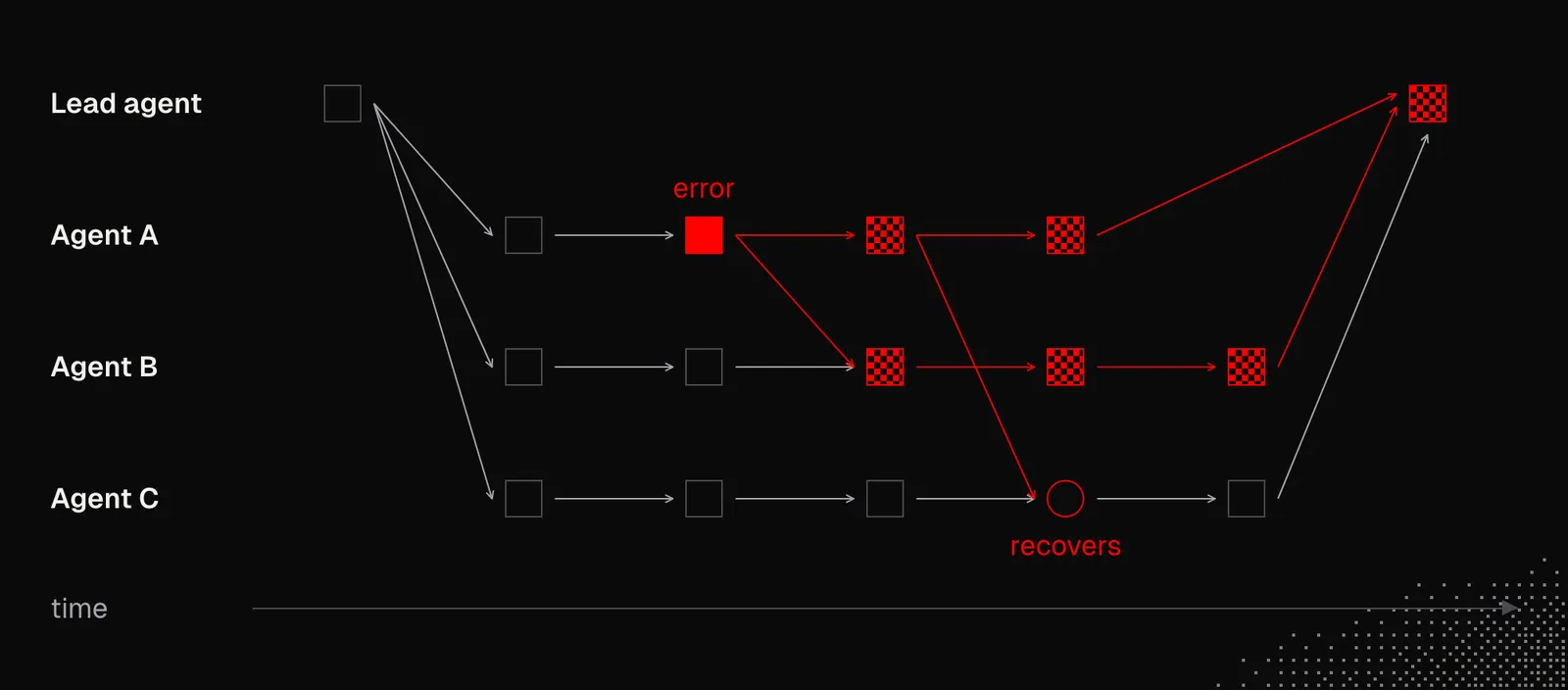
Below is an example of research performed by multiple agents. Each agent tackles the problem from a different perspective, and they collaborate to compare results and learn from each other. The whole fleet is set up dynamically, and in this case the lead agent controls the entire workflow - including spawning and closing each worker.
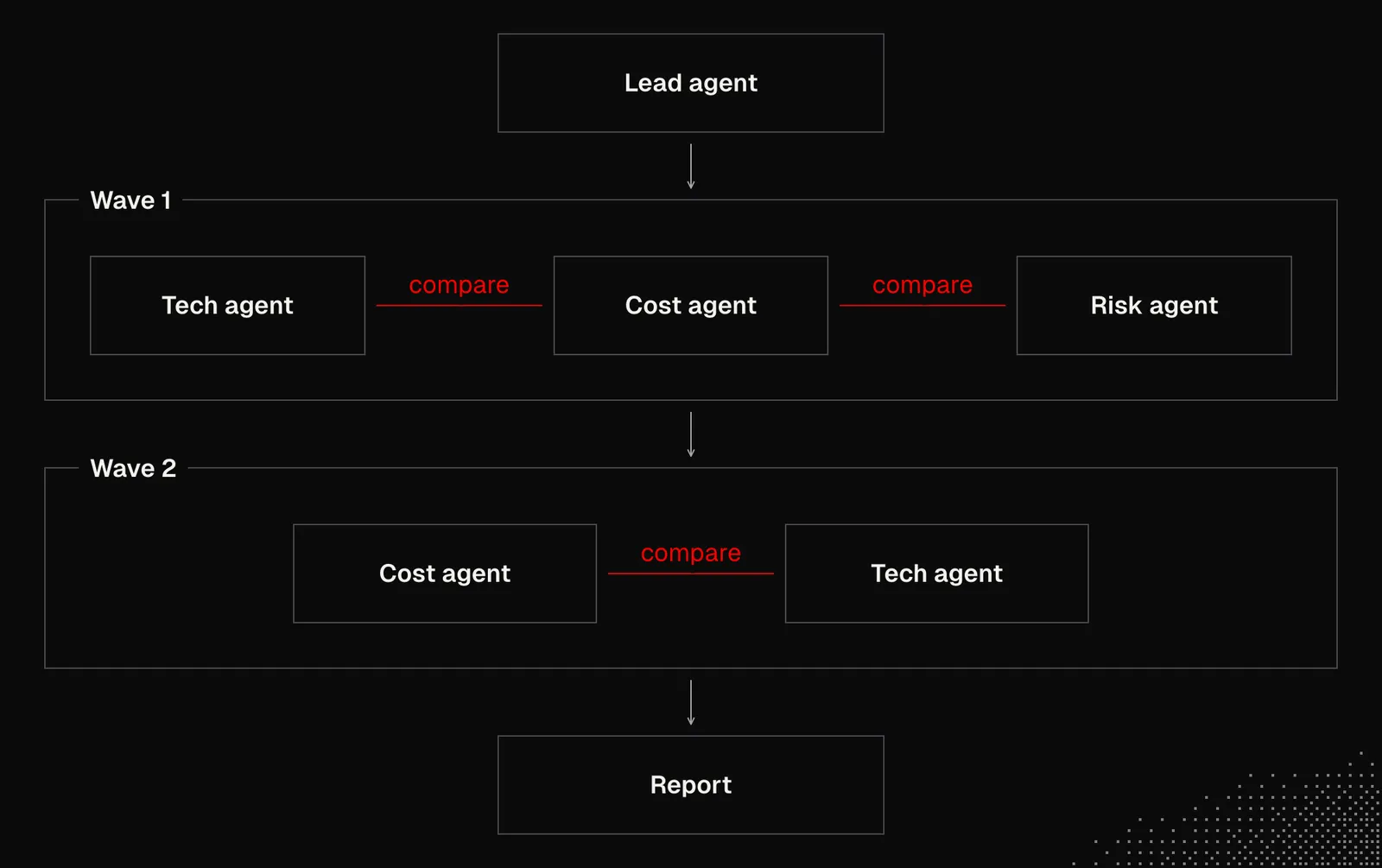
Agents in the graph above each have their own context, and we already know the mechanics behind it. But from our perspective, we also need to manage the broader context of the entire workflow, through which the agents communicate and the lead agent manages the rest. Besides context, in multi-agent systems we need to define the scope, capabilities, and permissions of each agent. That's why we need to decide which architecture we want to build for our use case.
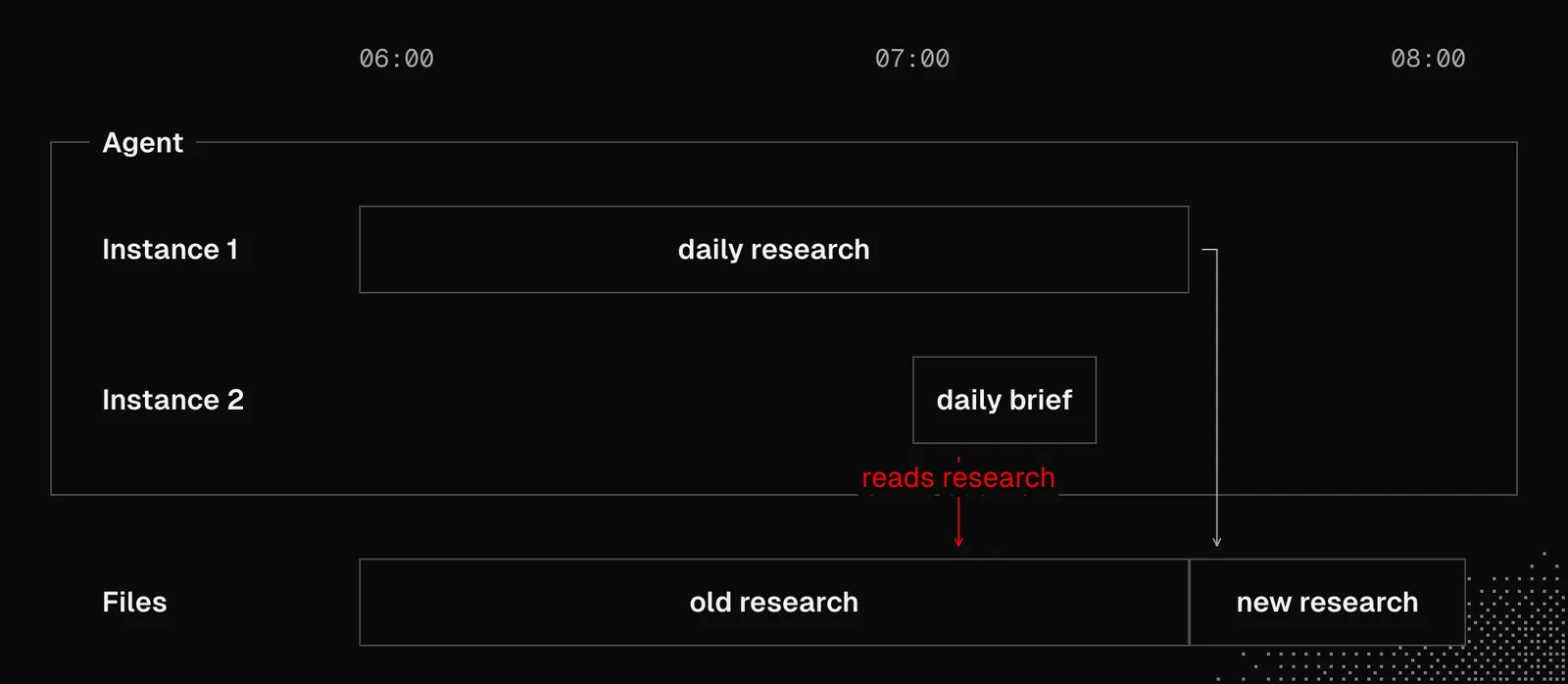
Single Agents: This may be counterintuitive, but a system built around one agent can still be multi-agent when several instances of that agent run that share the same resources and capabilities. This brings the opportunities and challenges typical of multi-agent systems.
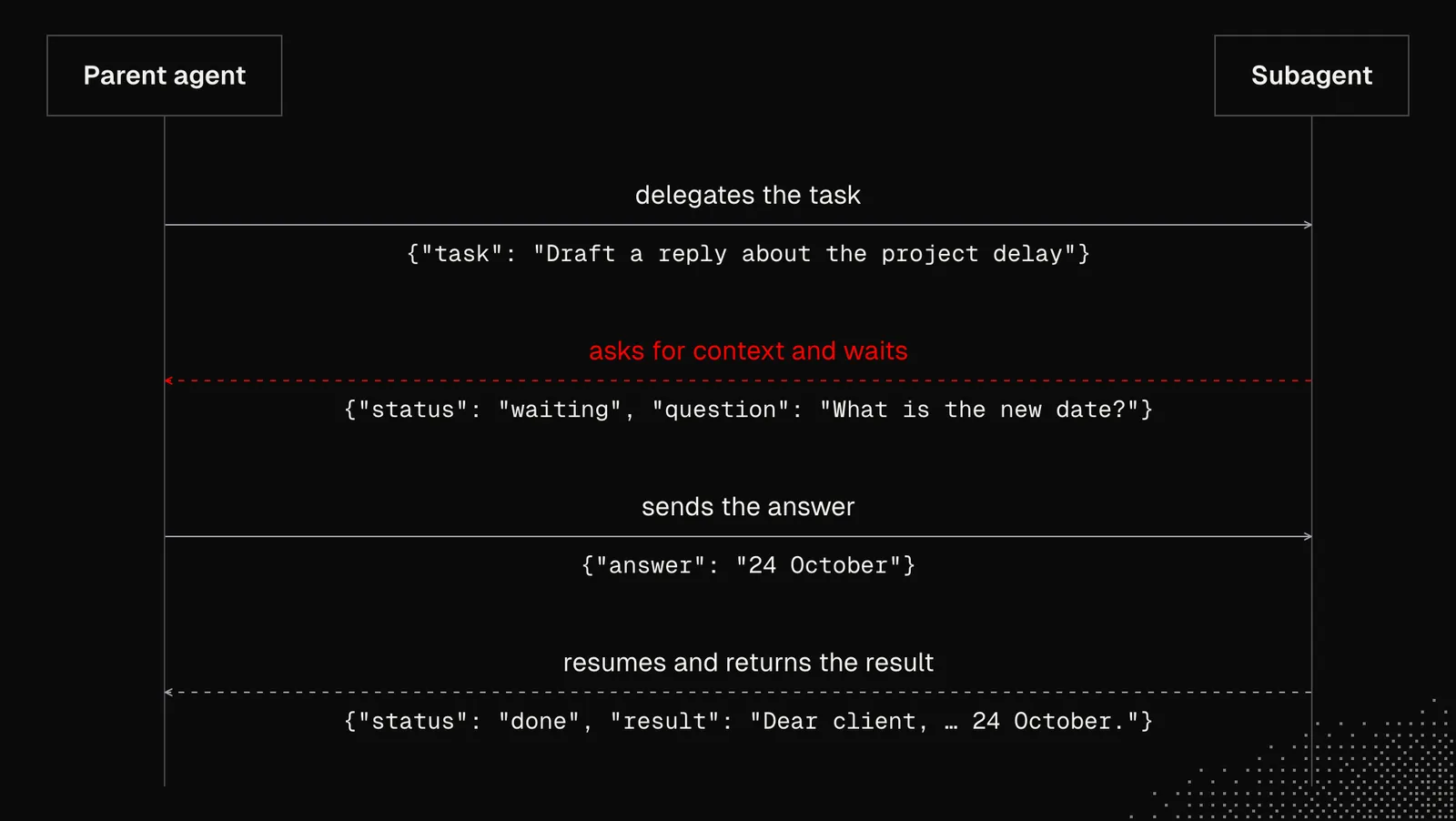
Subagents: Technically, a subagent is a mechanism, not an architecture pattern. It is present in most harnesses, although it can be implemented in many ways. The core concept is handoff: you pass a specific task to a separate, short-lived agent, which comes back with the results. Depending on implementation it may also allow waiting and resuming, so the subagent may ask for additional context or permission and finish their task once it has everything it needs.
Subagents may also be implemented as workers: separate, interactive instances that live on their own, emit events to the parent instance to communicate with it, and are controlled by it.
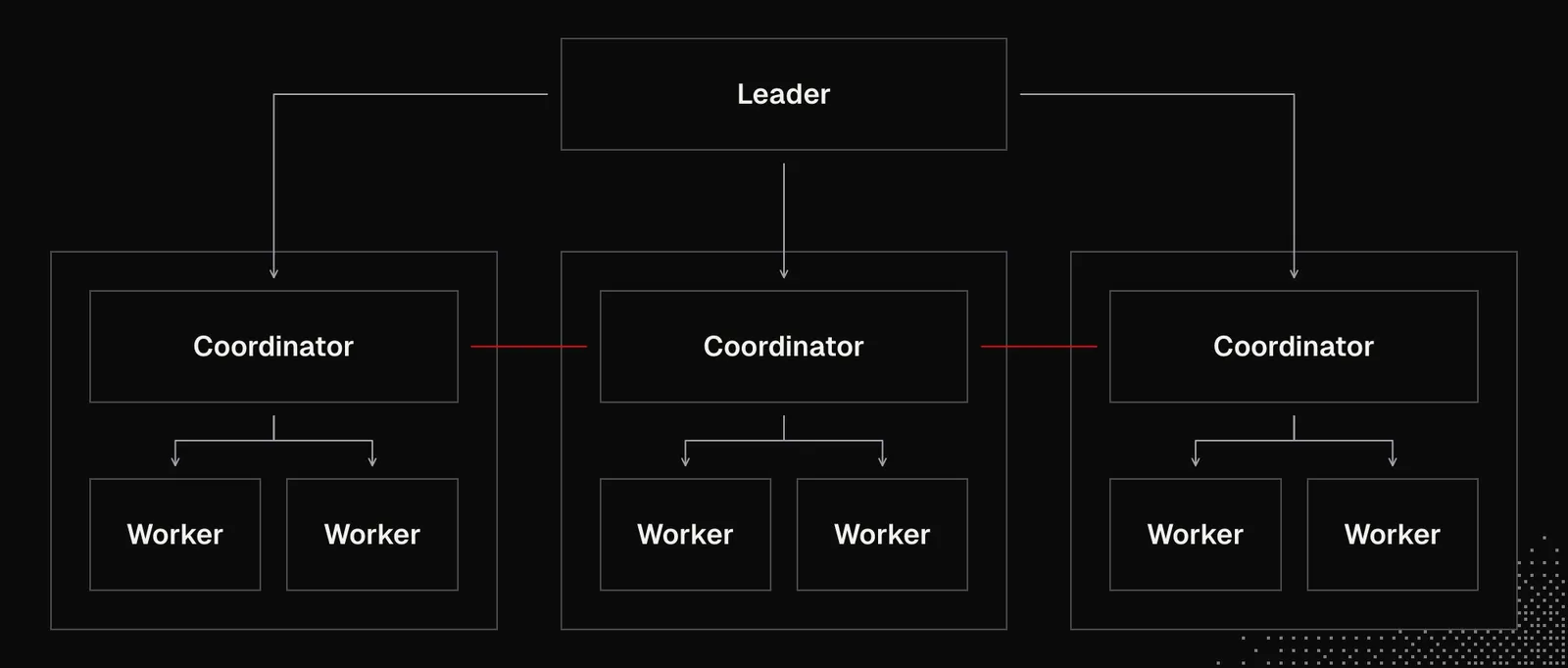
Hierarchy: Subagents are a delegation mechanism, but we can give them a structure that improves organization and context management. The result is a hierarchy that can be deeply nested and can include predefined workers and coordinators who manage them and collaborate with each other. Leaders and/or coordinators can assemble this hierarchy dynamically.
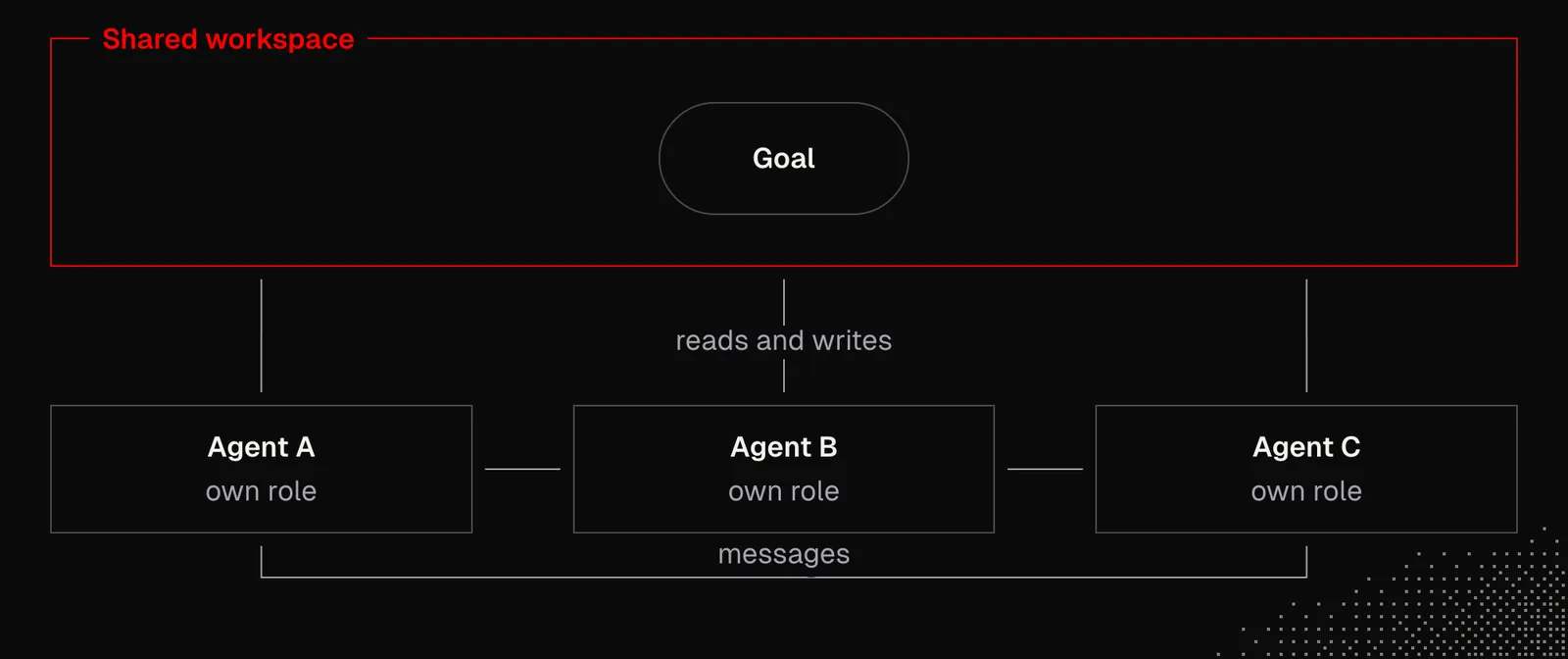
Team: Hierarchical structure implies connections between coordinators and leaders. But we may want a team of agents with specific roles, working toward a goal through a shared workspace. Every worker can communicate with the others, so there is no need for coordinators or leaders, although they may exist as well.
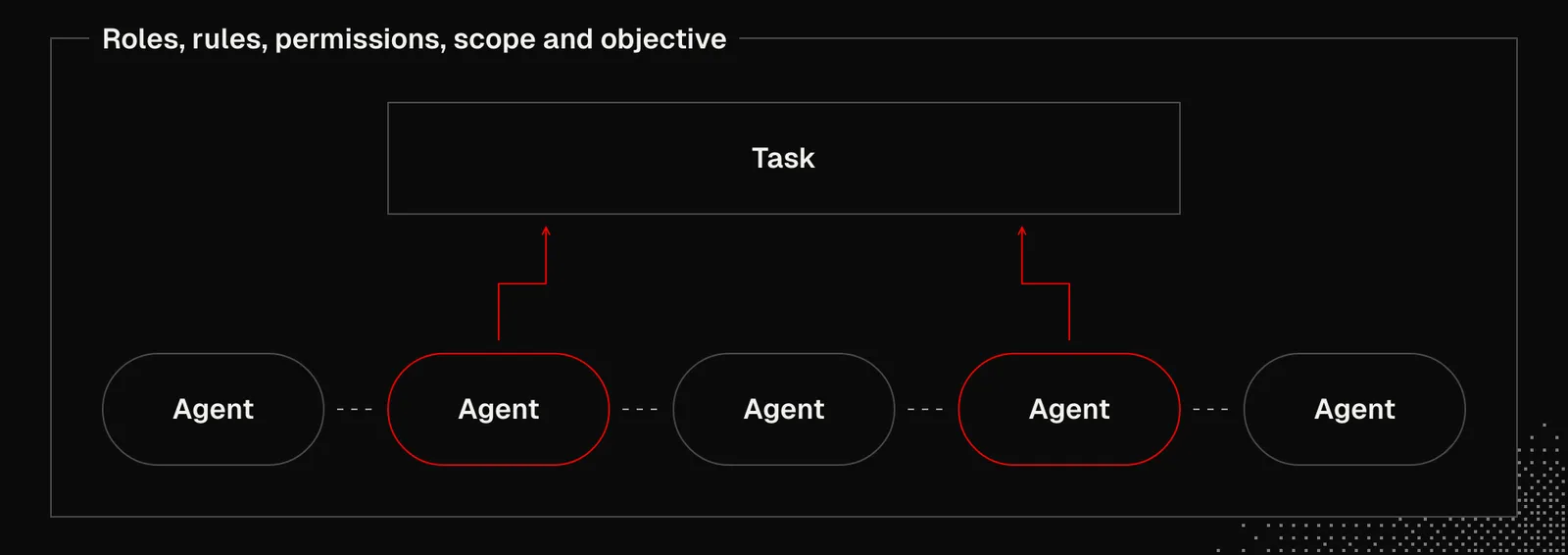
Swarm: A group of agents can decide for itself which agent or agents should take part in a given activity to accomplish a task. We may define roles, rules, and permissions, along with the scope and the main objective. But within these limits, the agents decide who does the work, and no lead agent controls the flow. This is a so-called swarm, an architecture that is not yet common in production. But as models get better, it may become more useful and popular.
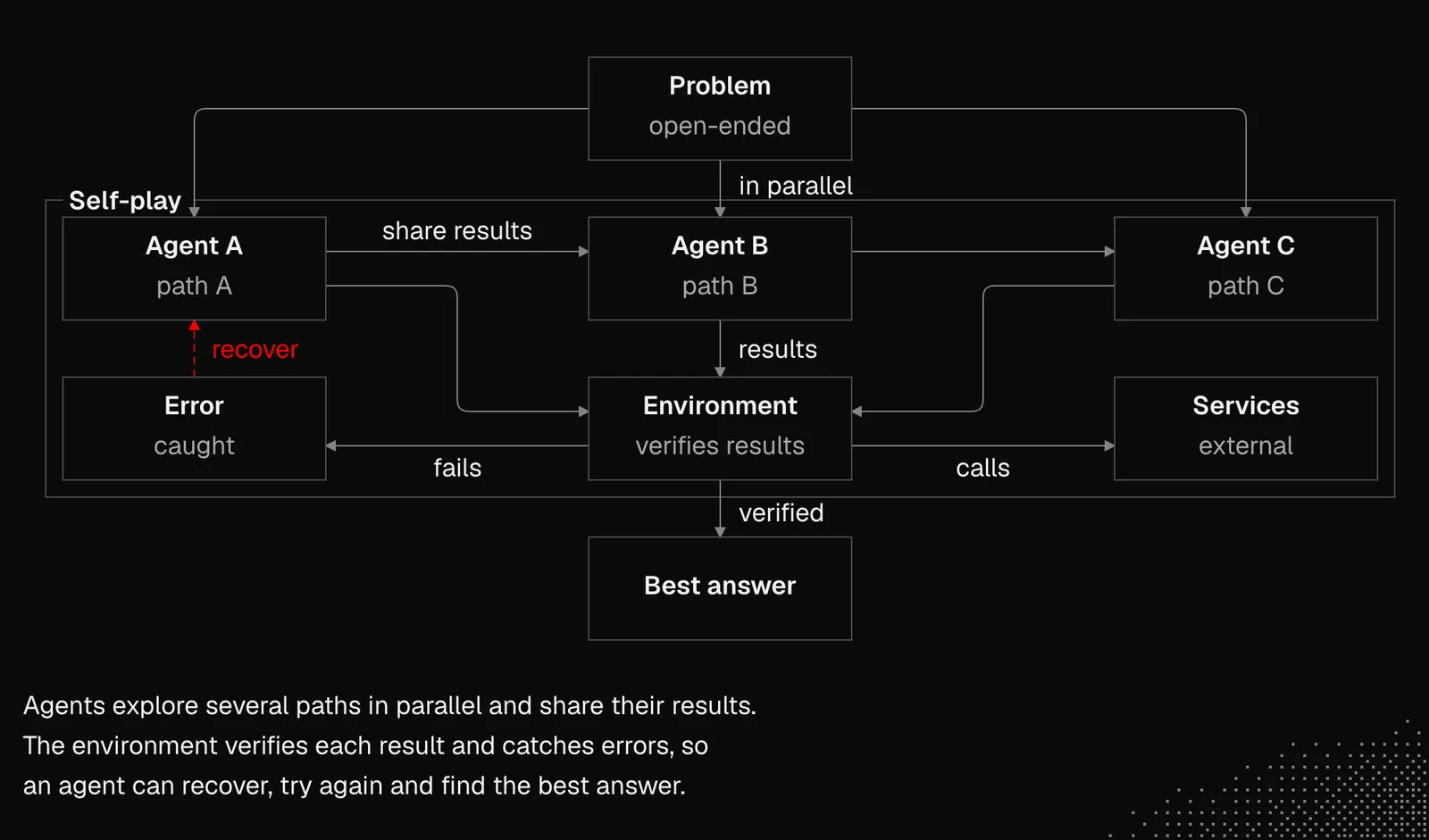
In general, multi-agent architectures are about addressing the limitations of current models in areas such as context windows or instruction following. This may suggest that as models get better, the value of these architectures will drop. But we can also think about them in terms of increasing efficiency through parallelism, which unlocks both speed and diversity of exploration. All this, together with environments that let agents empirically verify the results of their work, opens up incredible possibilities.
Also, agents may collaborate not only within our environment, but also with agents created by others, and this is one of the most important aspects to keep in mind when thinking about agents. In such scenarios, we may want to expose some capabilities to others while securing the rest.
Thanks to multi-agent architectures, we can work with hundreds or even thousands of agents at the same time. As we know from experience, working with just a few agents can be tricky. So we need to figure out how to cooperate with entire fleets, especially in terms of reliability, cost control, and speed.
It's worth keeping in mind that errors can propagate across agents. We need to pay special attention to the quality of the system, including error handling and reporting, and provide recovery paths.
Agent2Agent
Agents have to work together freely, but in most cases we don't want them to share their internals. The reason may be context management, specialization, our internal policies or the fact that the second agent does not belong to us. At the same time they need to be able to discover each other and understand what may be expected from the given agent.
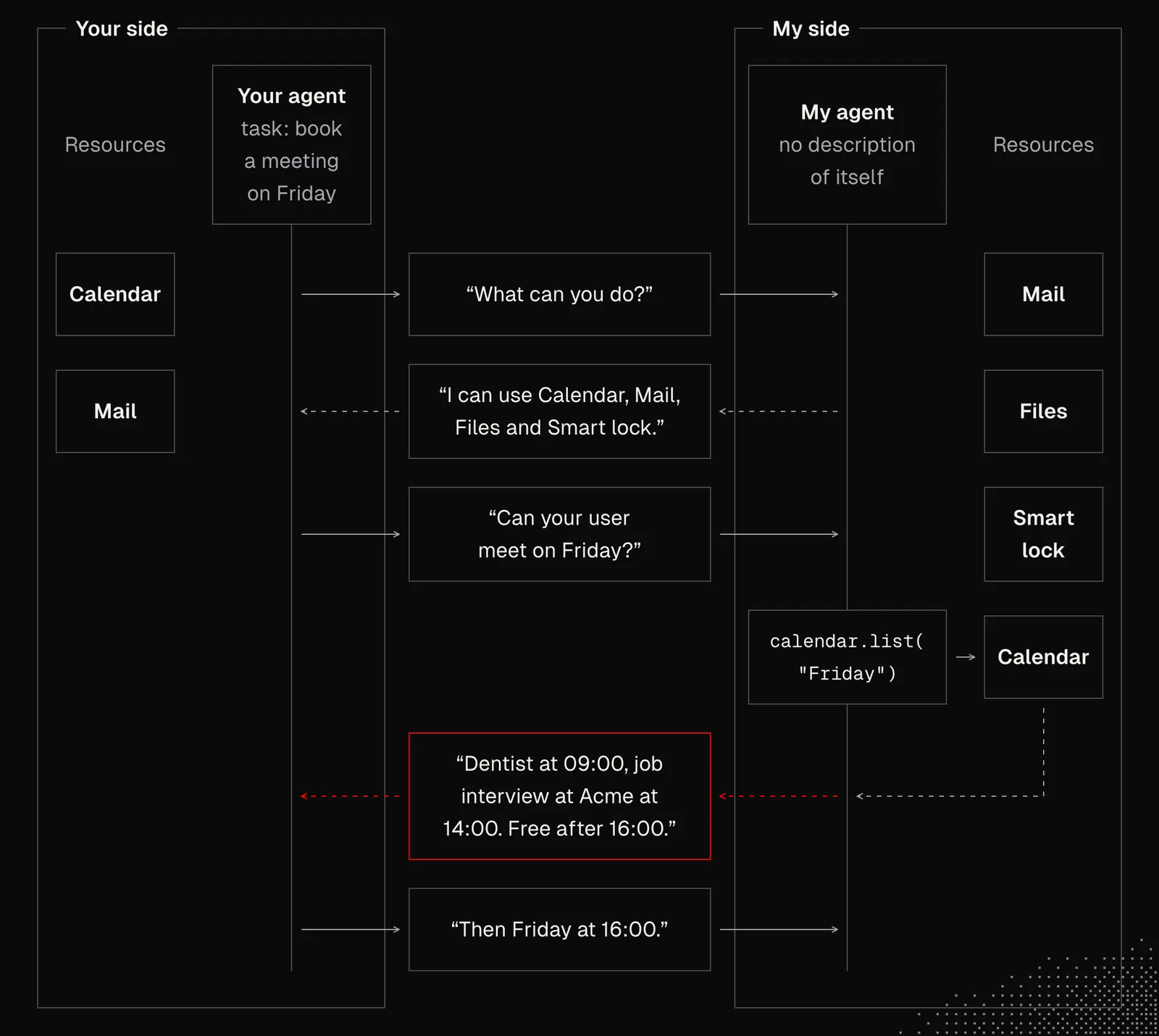
Let's say I have a personal agent that has access to my services, devices and resources. At the same time, I want you to be able to ask it for something without it revealing my personal details or giving you access to the apps I use.
We have two agents below trying to schedule a meeting. The problem is one of them revealed personal details about the calendar entries. And that's not the only issue, as with this configuration the first agent may ask the second agent to remove the calendar entries, and the second agent will comply.
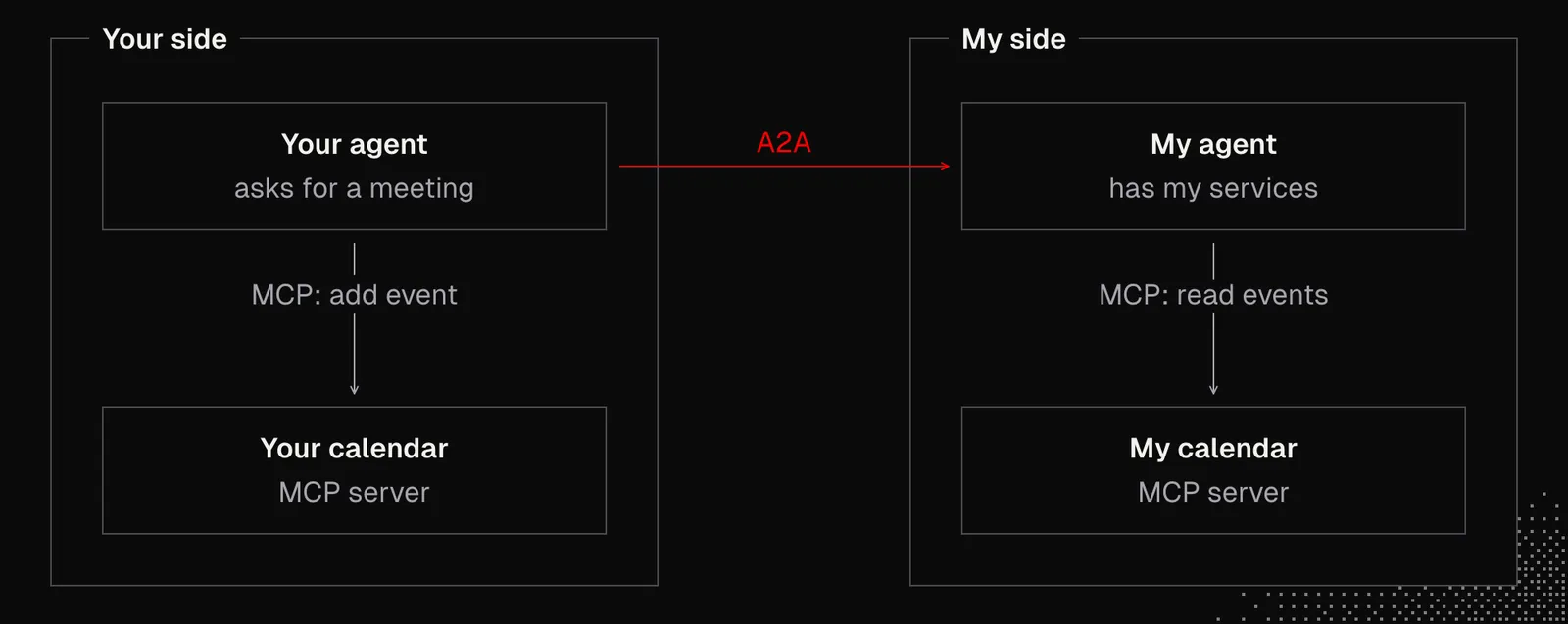
One of the best approaches to solving the problem of both discovery and communication is the Agent2Agent Protocol, or A2A. So far, it isn't as popular as the Model Context Protocol (MCP), and it's hard to tell if it ever will be. At the same time, the two protocols don't compete, because MCP extends what a single agent can do, while A2A connects agents to each other.
Below is an example of two agents, where one discovers the other. In this scenario, the first agent becomes a client and the second becomes a server. Depending on the configuration, this may work both ways, with each agent acting as both a client and a server.
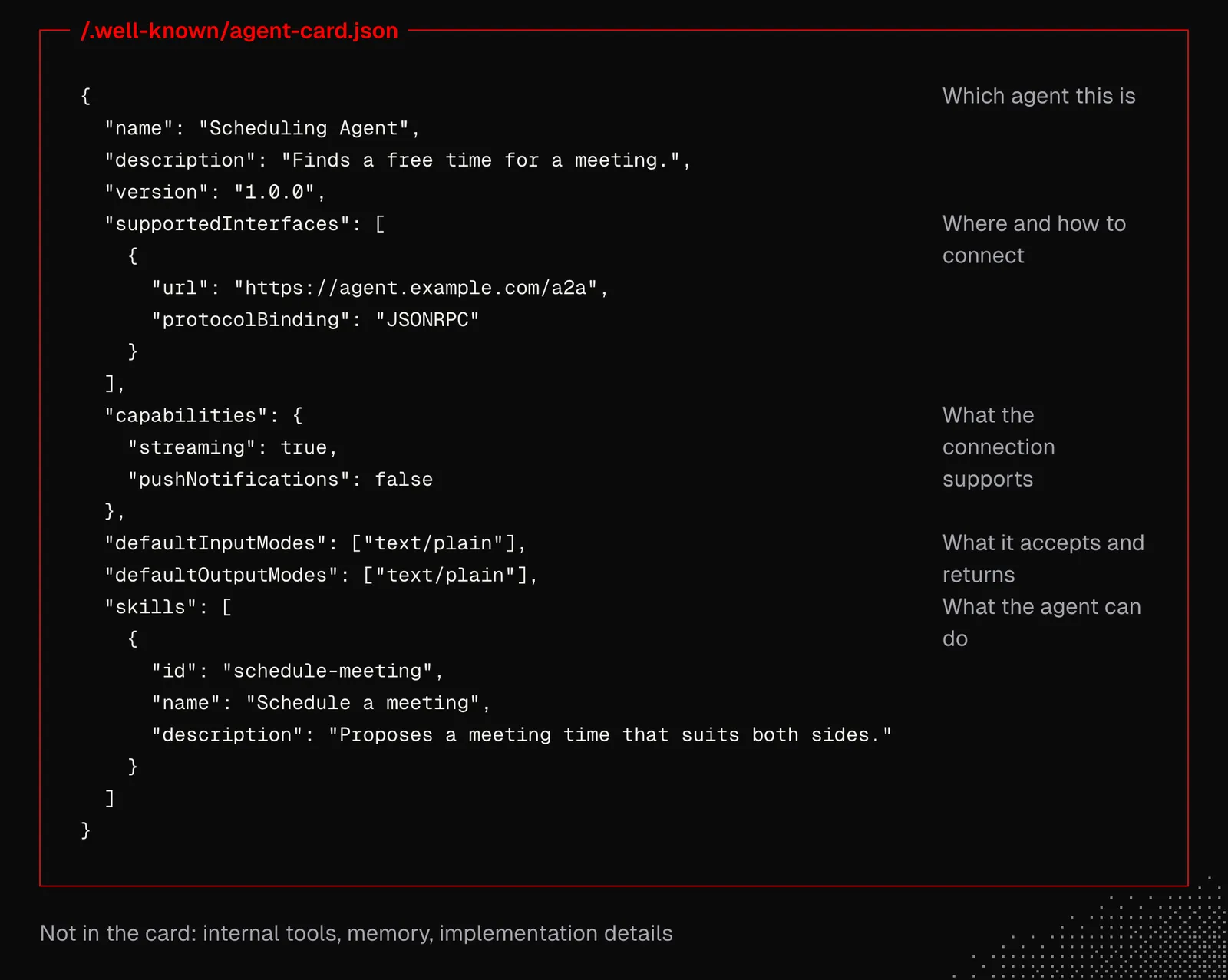
The A2A protocol is based on the idea that every agent introduces itself with a card containing its name, description, version, available skills and connection details, as well as some metadata such as provider information or capability flags. Cards are available through the well-known URI convention (RFC 8615). It is also worth knowing that the card can be restricted to authorized users when needed.
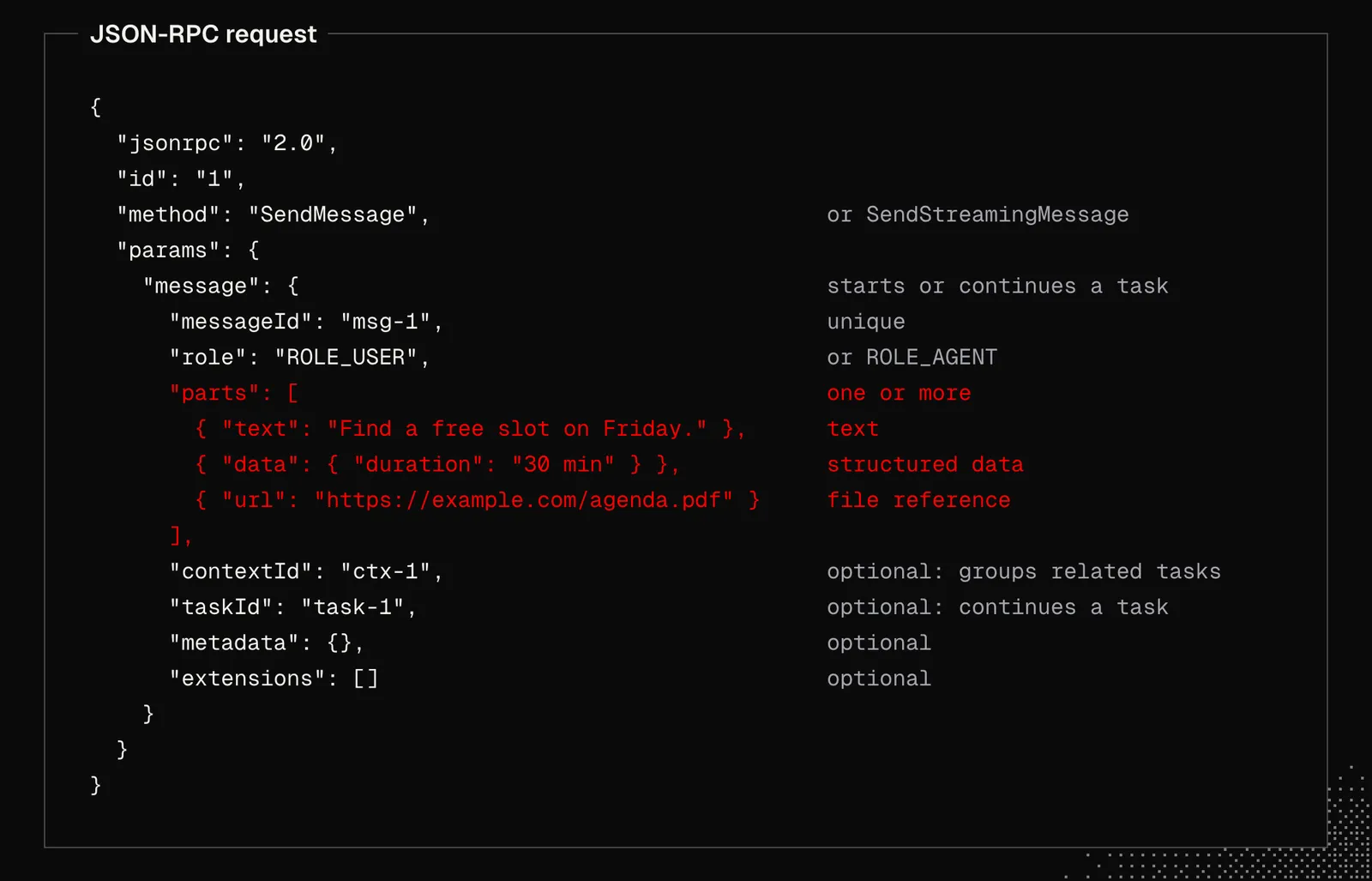
Agents share only the most important information, so they don't share threads. That means the communication has to include everything that's needed, including the necessary context. And that context may be more than just text: it can also be structured data, such as file references.
The communication happens over HTTP(S) requests and often follows the JSON-RPC format, so messages contain properties such as jsonrpc, id, method and params. An example envelope is shown below.
An interaction can be handled in a few ways: polling, server-sent events, or push notifications. The pattern we choose here depends mostly on our needs for responsiveness and persistence.
Let's say we have a research agent that needs some information from a second agent. The interaction goes like this:
- Agent A discovers Agent B's card and learns about its capabilities. 2. Agent A sends Agent B a message containing all the information it has. 3. Agent B needs one more detail. It pauses the task in the input-required state and asks a question. 4. Agent A sends the answer with the same task ID. 5. Agent B completes the task and returns the results.
And below we have a possible representation of that exchange. It is also worth cloning this repository and chat about included samples with our agent, to explore available patterns.
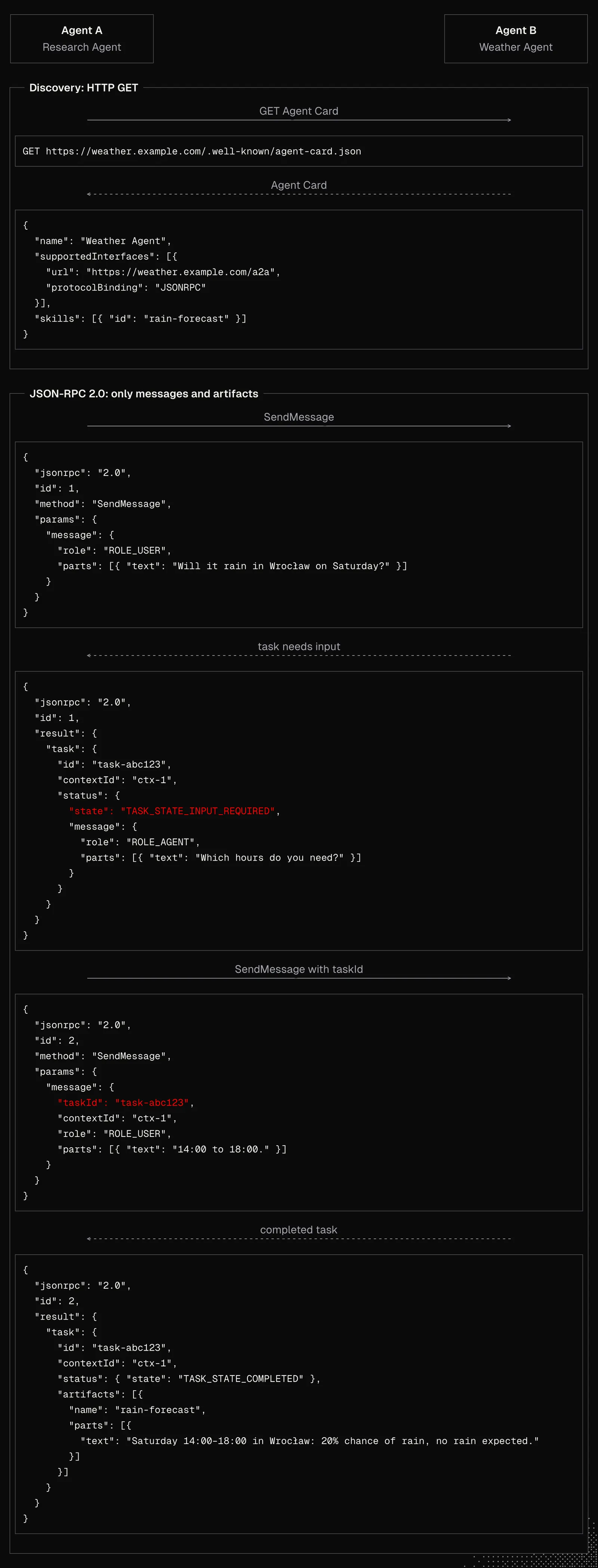
Regardless of whether A2A becomes part of our system, it is still worth exploring its concepts as they may be valuable for building custom multi-agentic systems. One of them is concurrency. While A2A does not solve this completely, it comes with ideas such as:
- Multitasking: the agent can handle multiple independent tasks at once, each with its own ID and state.
- Multiple Streams: allows multiple clients to subscribe to the results of the same task. Events are broadcast to all active streams in the same order. Closing one stream does not affect the others.
- Task ID management: IDs are generated by the server, not the client to avoid collisions.
But in practice, there are many more challenges and issues, so let's explore some of them.
Multi-agentic collaboration
The latest models are getting really good at long-horizon tasks, but all it takes is trying to work with agents within a team to see how difficult it is to manage work that can happen so fast. Even the simplest activities easily overlap and conflict with each other. And people aren't the only ones who have a hard time keeping up. Agents quickly get confused too.
Although I don't have answers to all the questions we're facing in our work, it's worth keeping the following in mind:
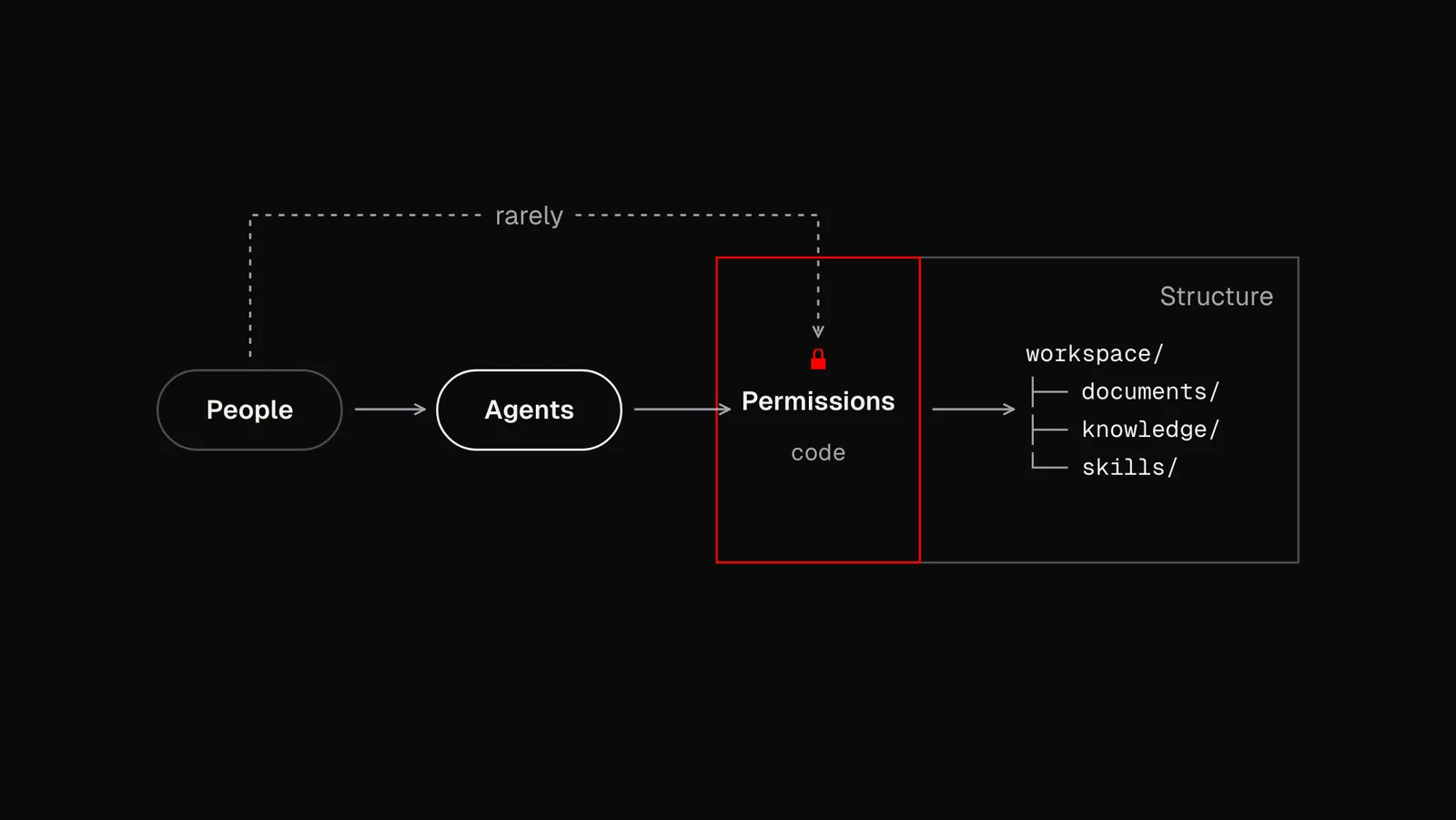
Structure: Agents can easily navigate complex structures, but it's still worth keeping things as simple as possible and agentic-first. It's also worth deciding whether humans will ever read the documents in their original form, because even today most people interact with content through their agents. The structure has to natively address any requirements related to security and permission management as those aspects need to be handled by deterministic logic, and not agents alone.
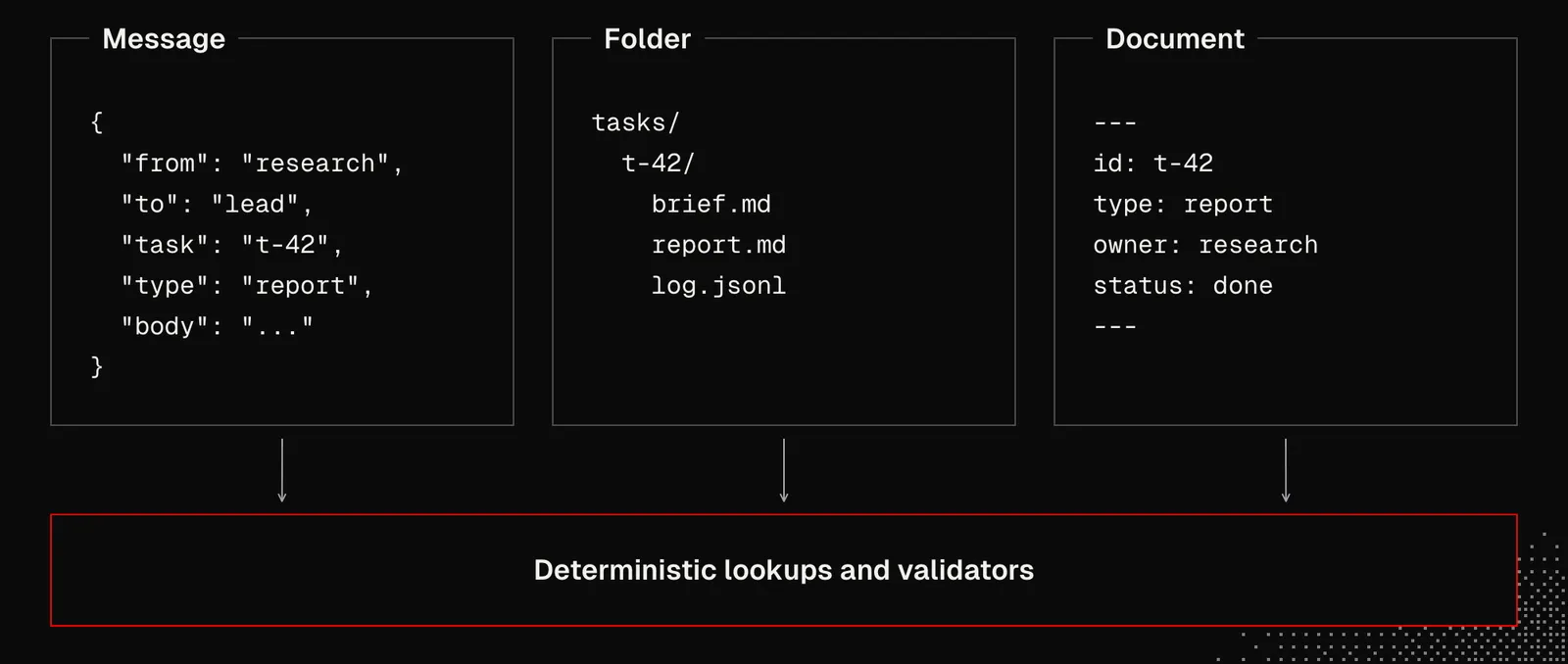
Contracts: Following A2A, we may want unified contracts for documents, folders, communication, reports and activity logs. This structure opens the way to deterministic lookups, validators and health checks. In some cases, we may want to consider graph databases.
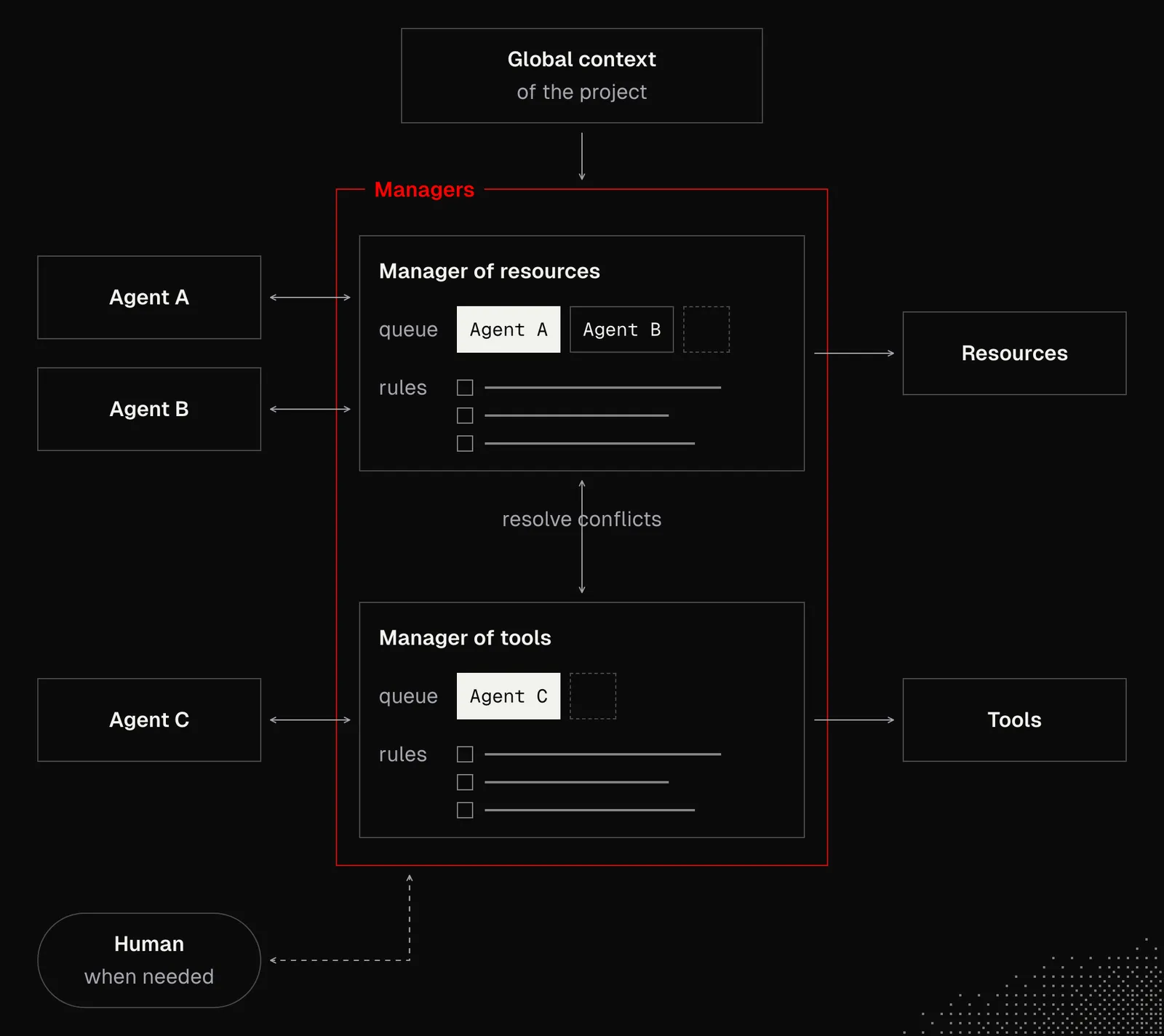
Management: Manager roles in multi-agent systems are crucial and worth the effort to get right. Once managers properly understand both the broad and the narrow context of the project, they can make useful decisions for other agents. So instead of all the agents accessing resources directly, they contact the agents responsible for managing those resources.
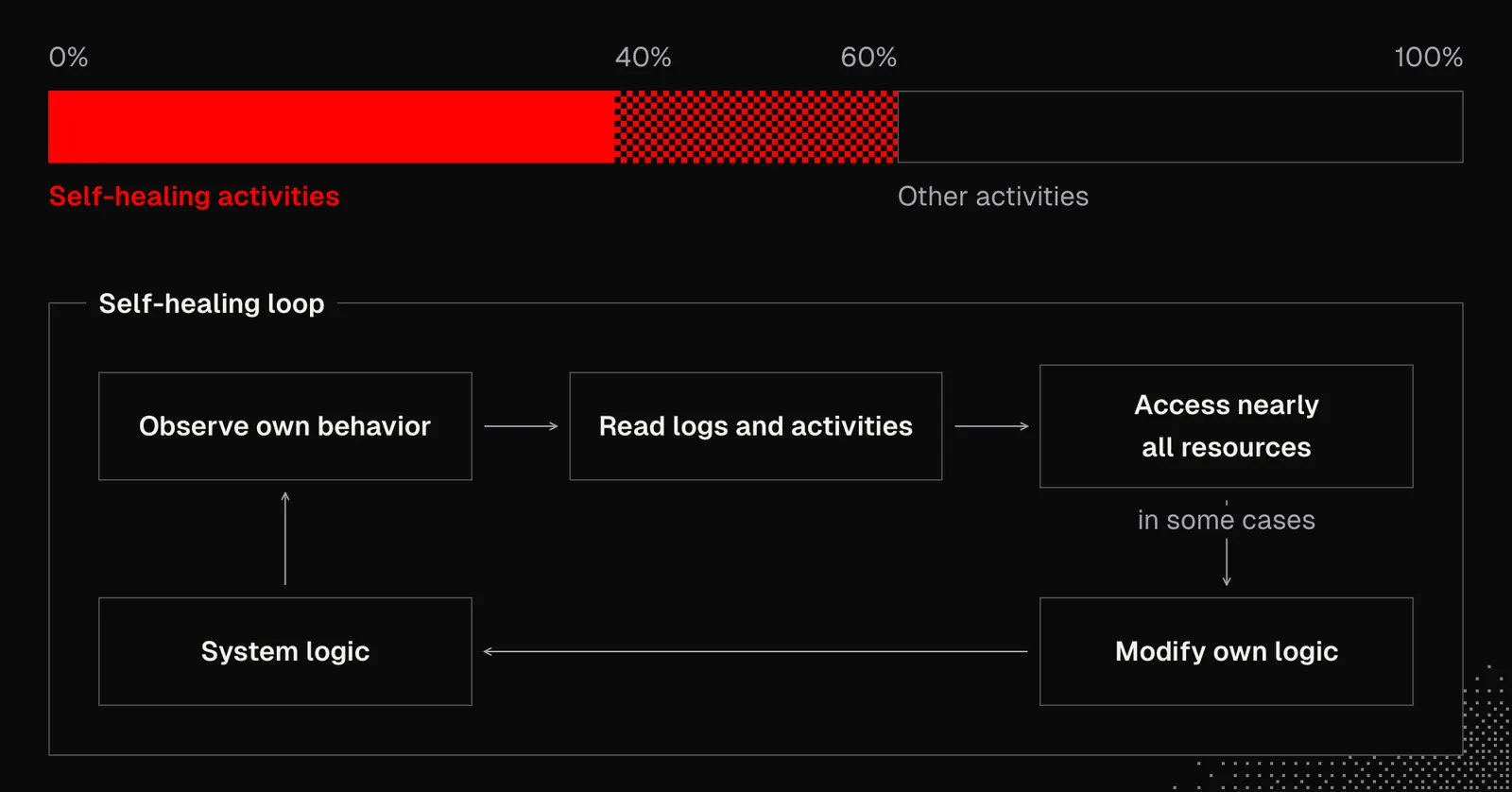
Self-healing: The entire system has to be built so that it can observe its own behavior, access nearly every type of log and activity data, and, in some cases, modify its own logic. Self-healing activities are crucial and may account for as much as 40-60% of all the work the system does. In practice, this means that most of our focus needs to be on shaping the mechanics that agents need for nearly autonomous development we can trust.
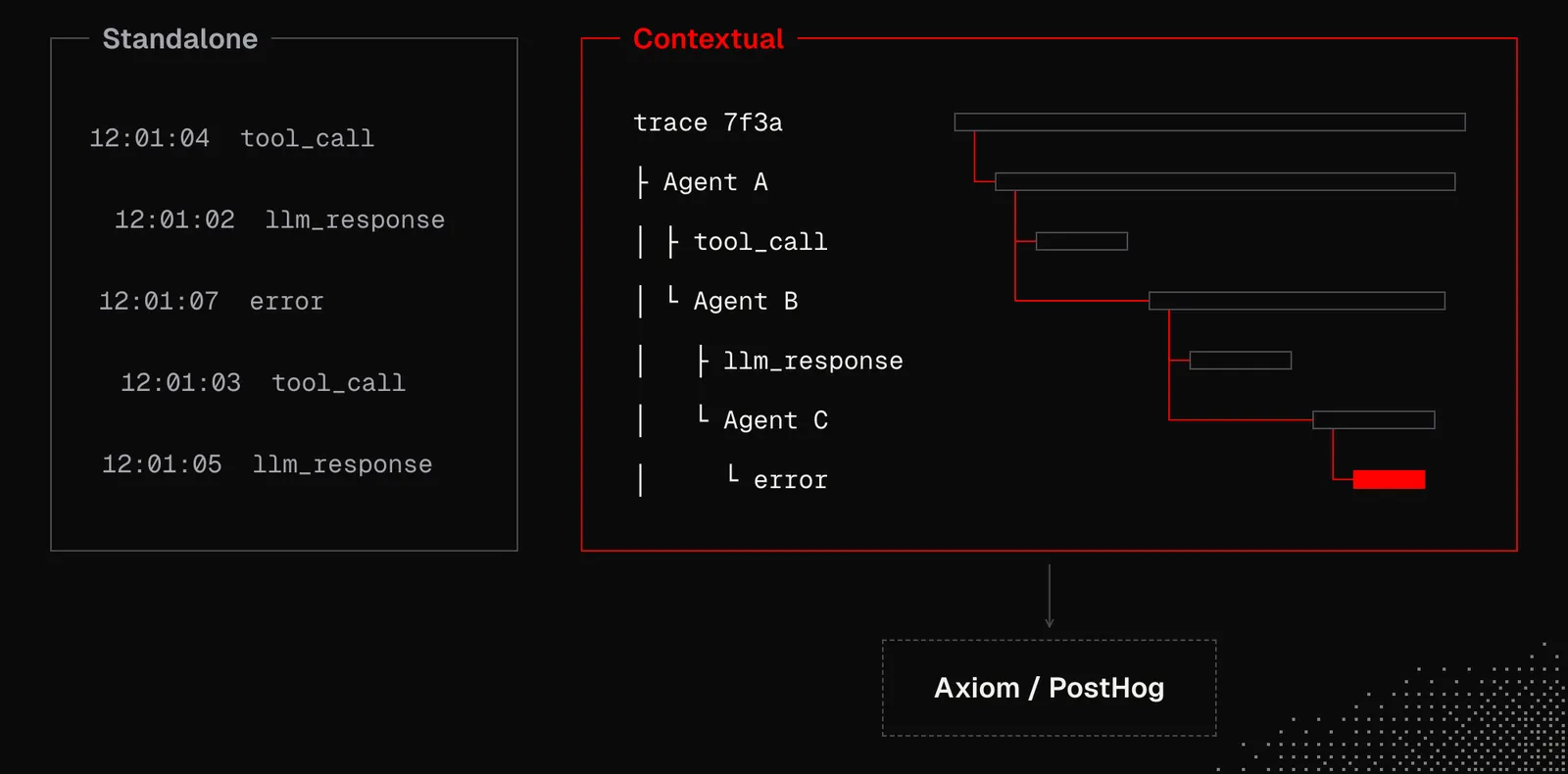
Activity tracking: Track everything that happens within the system with platforms such as Axiom and/or PostHog. In fact, observability is critical because we're dealing with non-deterministic logic whose behavior cannot be clearly explained or 'debugged' from the code alone. Observability logic has to be wired natively into the system, so we don't just log standalone events but keep all of them contextual. That way, it's possible to track the entire interaction between all the agents involved.
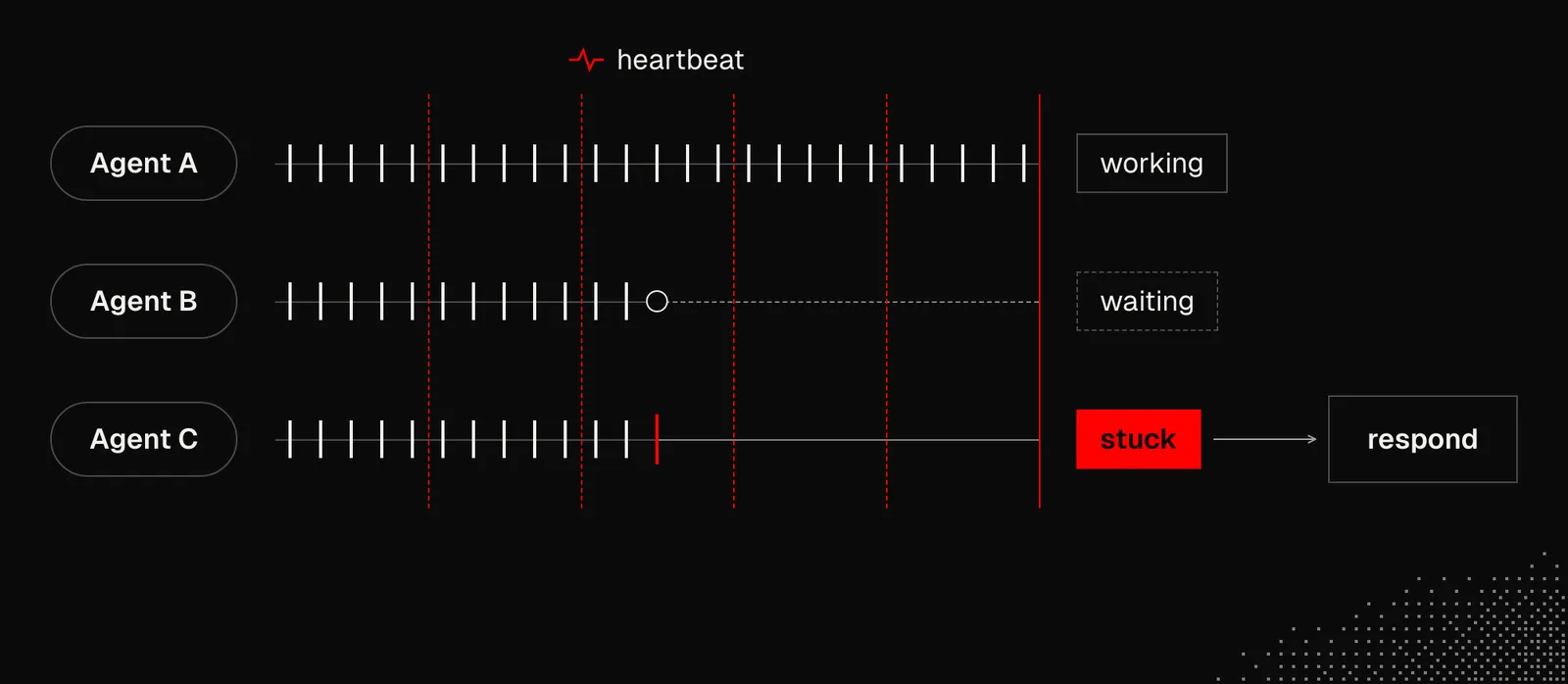
Heartbeat: When working, agents may encounter various errors or dead ends, or simply get stuck for some reason. The problem is that in long-horizon tasks, it's not obvious whether an agent is stuck, still working or waiting for something, and we need to catch that properly and respond. The good news is that there are well-known mechanisms for this, and one of them is a heartbeat that lets us periodically check agents' activity.
At this point, it should be clear that building multi-agent systems is demanding, especially because it isn't just about the technology, but also about business processes, decisions and needs. On the other hand, some of these mechanics can be built quite easily on top of existing harnesses by extending their capabilities through MCP servers or customization. We just need to make sure our setup isn't built around issues that will soon be solved. The best way to check this is to keep asking: what will happen to your system when models / harnesses get better?
Orchestration
Working directly with agents makes us responsible for managing their work, helping them figure out issues, and steering their actions toward a bigger goal. For agents to operate on their own, most of these activities need to be translated into the system features we've discussed so far. But in the real world, the outcomes need to be reliable enough to be predictable (which may be achieved in many ways).
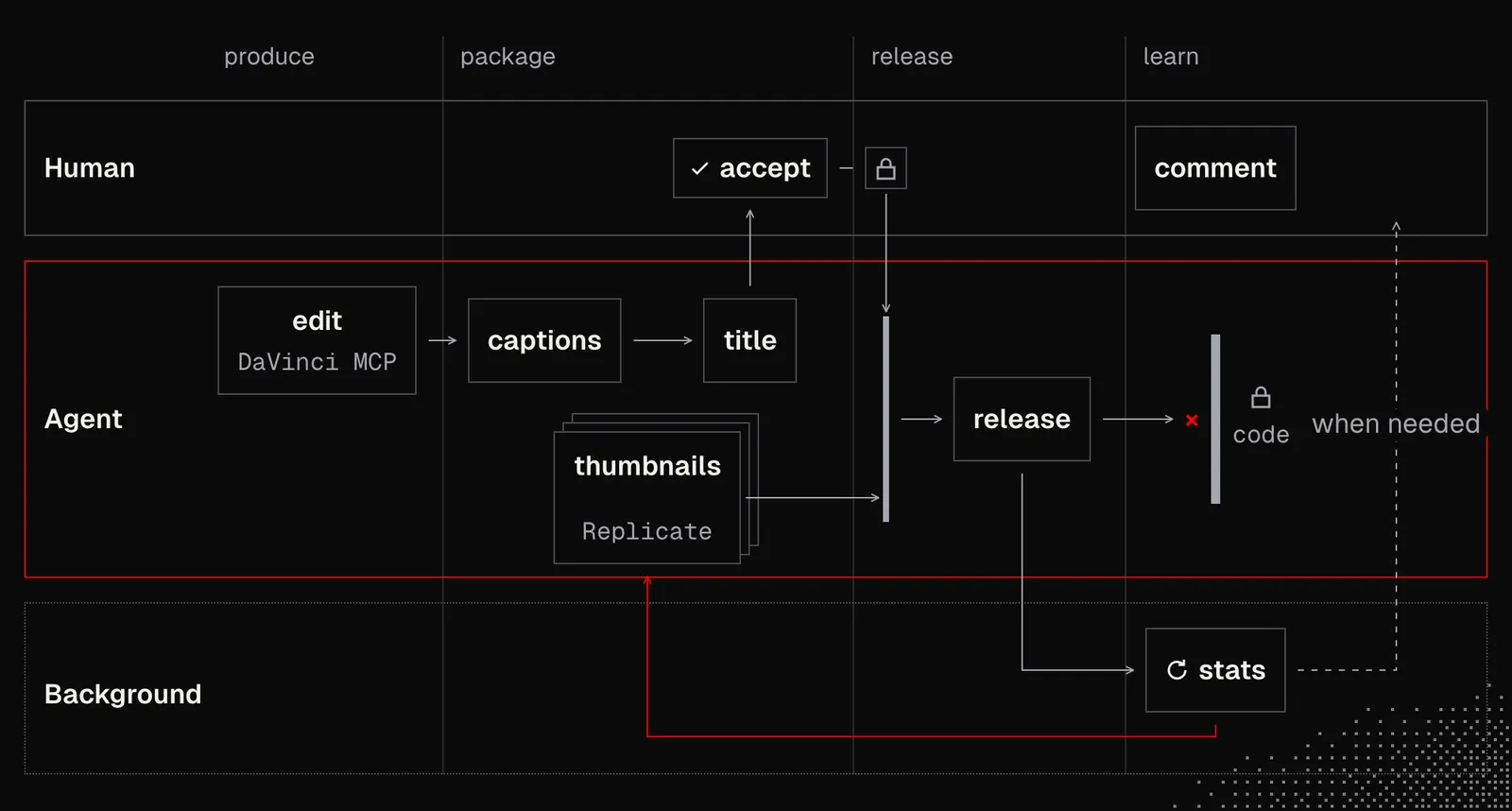
Let's say we want agents to handle the publication process for YouTube videos. Such a process may consist of many steps, such as:
- editing raw recordings, cleaning up and mastering the audio,
- generating captions and translated subtitles,
- getting a title, a description, tags and chapter markers,
- designing a couple of thumbnails to iterate on,
- checking copyright, music licenses and sponsorship disclosures,
- setting up end screens, cards and playlists, cutting Shorts and clips,
- drafting social media posts, a community post and a newsletter,
- scheduling the release, writing a pinned comment,
- and, after release, tracking comments and analytics to adjust the title and thumbnail.
That's a lot! And regardless of the LLMs' native capabilities, the chance of getting everything right every time we publish a video is low, as most of those steps depend on our own strategy, preferences and procedures. Additionally, nearly every step may present an edge case that has to be resolved by either a well-trained agent or a human.
The entire process not only has to be reliable, but also consistent and continuously improved, so lessons from the past must affect the system's current behavior.
But based on what we've learned so far, it should be clear that the goal isn't to create a system for video publication but to build primitives (generalized building blocks) that let the system adjust to the current situation. That includes modifying the process or even handling a different process that may share similar primitives.
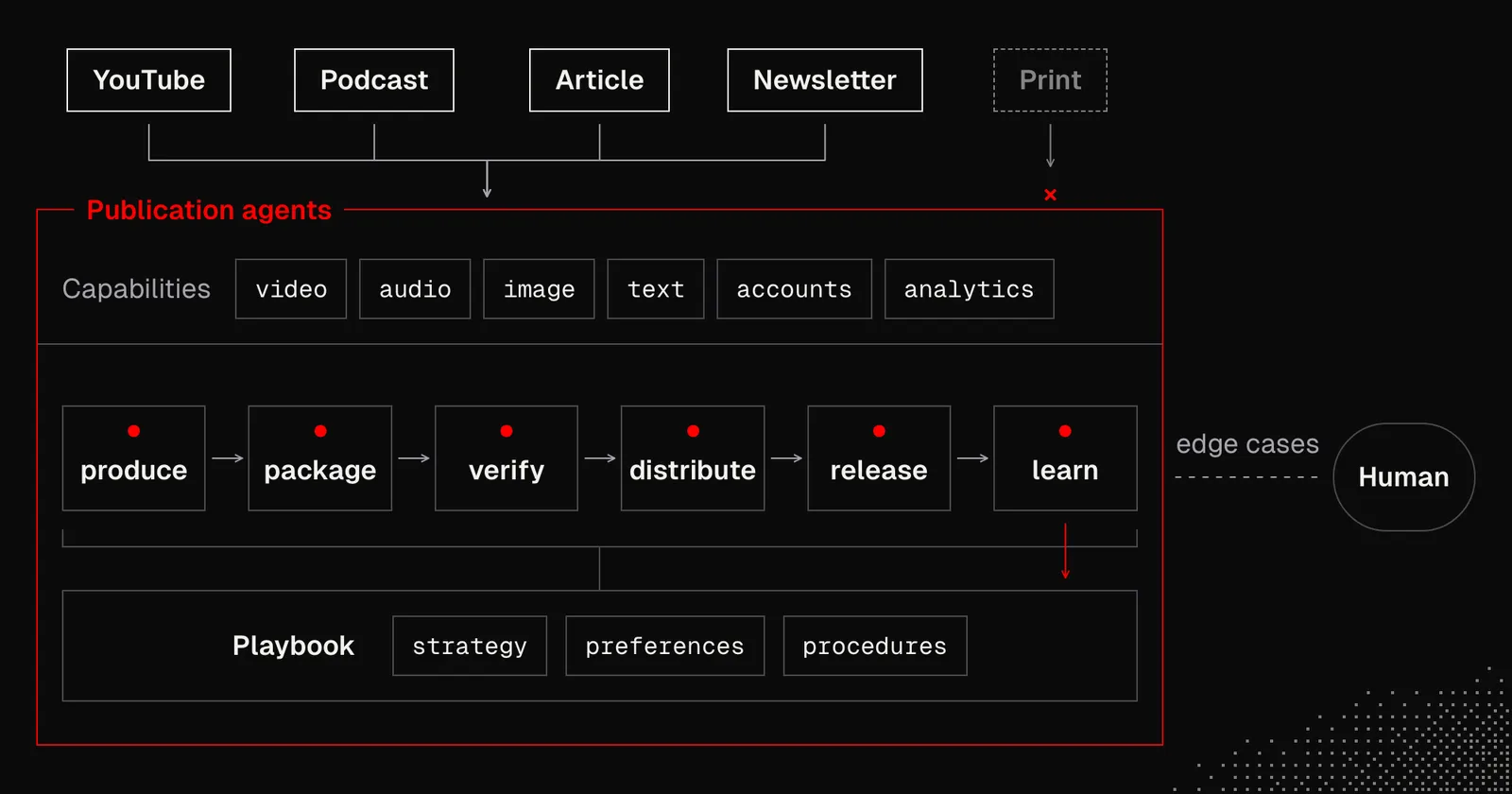
The difference from classic systems or automation workflows should be clearly visible here, because with AI, we gain flexibility at the cost of control. The problem is that control is often crucial in business processes. For example, we may not want to let the agent post public comments under our name.
The first lesson here is that when we need 100% certainty, we can't rely on LLMs (although a million-step task has been solved with zero errors).
The second lesson is that not every action in a business process requires certainty, which means all we need to do is find the right balance between agentic logic and deterministic code. In our example we may think of this as follows:
- video editing can be done with DaVinci MCP and an agent
- thumbnails can be generated through Replicate or with a custom AI image-generation tool
- title, description etc. may be iterated by an agent and only accepted by a human
- tracking activities and stats may be done autonomously and humans may be notified only when needed
The level of autonomy here depends on the business, but we can clearly see that some steps can be done entirely or partially by agents. Also, some steps depend on each other while others don't, and these dependencies may often come from business decisions, including the need to physically block an agent from certain actions. And lastly, some actions have to be performed entirely in the background, without direct supervision.
Takeaways
Now, putting this all together with what we've learned so far:
- Agents: even though a single agent could potentially handle the entire process, splitting responsibilities between agents gives us control over their context, capabilities and permissions, as well as over concurrency, conflicts and structure.
- Primitives: well-chosen, generalized building blocks unlock flexibility both in code and at runtime. With primitives, it's possible to easily extend the capabilities of the entire system with minimal code changes.
- Code Mode: agents may automate part of their work through code, as some actions are repeatable and don't require AI unless their logic needs to change.
- Context: when agents are spawned, they may receive both dynamic context from their parent and predefined instructions that depend on their role or the current state of the system.
- Dependencies: agents or code can control the process by defining which steps can run in parallel and which depend on each other. Also, some actions may be blocked until certain conditions are met. For example, publishing a comment can be blocked until a human approves it, but once that happens, the comment cannot be edited without additional approval. One way to achieve this kind of logic is a directed acyclic graph (DAG).
- Durability: and lastly, since we're dealing with a long-horizon process that is partially handled in the background, using pi-durable or relying on agents that can recover from a crash is a must.
The list above reflects how our MEGA journey is increasingly moving us towards agentic systems. We can look at them from the perspective of software development and through the logic of multi-agent systems capable of managing or autonomously handling entire business processes.